

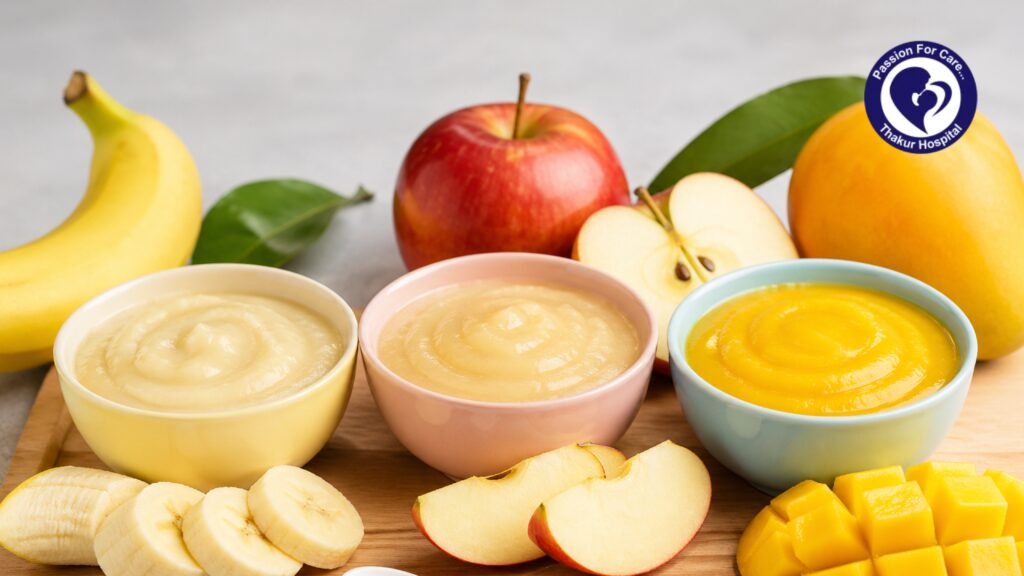
Introducing fruits to your baby is an exciting milestone—but it often comes with confusion. Many parents in Karnal ask, “When should I start apple?” “Is banana safe daily?” “Can mango cause heat?”
The truth is, fruits are excellent for your baby—but only when introduced at the right age and in the right way. Starting too early or incorrectly can lead to digestion issues, allergies, or food refusal.
Let’s simplify it so you know exactly what to give and when.
When can babies start fruits?
Most babies are ready for fruits after 6 months of age, once solid feeding begins. Before this, breast milk or formula is enough for all nutritional needs.
Starting fruits too early can strain your baby’s digestive system, while starting too late may lead to nutrient gaps. Timing matters.
Signs your baby is ready for fruits
Before introducing any fruit, make sure your baby shows these signs:
- Can sit with support
- Has good neck control
- Shows interest in food
- Opens mouth when offered food
- Can swallow semi-solid food
If these signs are present, you can begin fruit introduction safely.
Apple: When and how to start?
Apples are nutritious but not the easiest fruit for beginners because they are hard and fibrous.
Best age to start apple:
- Around 6 months, but only in cooked form
How to give apple:
- Steam or boil the apple until soft
- Mash or puree it properly
- Avoid giving raw apple chunks to prevent choking
Benefits of apple:
- Rich in fiber for digestion
- Supports gut health
- Mild and less likely to cause allergies
Avoid raw apples until your baby is older and can chew properly.
Banana: The easiest first fruit
Banana is one of the best starter foods for babies. It is soft, naturally sweet, and easy to digest.
Best age to start banana:
- Around 6 months
How to give banana:
- Mash it well with a spoon
- You can mix it with breast milk or formula for smoother texture
Benefits of banana:
- Provides instant energy
- Rich in potassium
- Helps with weight gain
Banana is a great everyday fruit for babies in Karnal due to its easy availability and nutrition.
Mango: When can babies enjoy it?
Mango is loved by many, but parents often worry if it’s too “heaty” for babies.
Best age to start mango:
- Around 6–7 months
How to give mango:
- Use ripe, sweet mango only
- Mash or puree it well
- Start with small quantities
Benefits of mango:
- Rich in Vitamin A for eye health
- Boosts immunity
- Naturally sweet, making it baby-friendly
The “heat” concern is mostly a myth—just ensure moderation and proper hygiene.
Which fruit should you start first?
Start with easily digestible fruits like banana, then gradually introduce apple (cooked) and mango.
Follow a simple sequence:
- Week 1: Banana
- Week 2: Apple puree
- Week 3: Mango puree
This gradual approach helps your baby adjust to new tastes and textures.
Important feeding rules parents should follow
- Introduce one fruit at a time
- Follow the 3-day rule to check for allergies
- Start with 2–3 spoons and increase gradually
- Always give fresh, homemade fruit puree
- Avoid adding sugar or salt
- Feed during daytime to monitor reactions
These small steps can prevent major feeding issues.
What signs of allergy should you watch for?
- Skin rashes or redness
- Vomiting
- Loose motions
- Swelling around lips or face
If you notice any of these, stop the food and consult a doctor immediately.
Common mistakes parents in Karnal should avoid
- Giving fruit juices instead of whole fruit
- Starting fruits before 6 months
- Forcing the baby to eat
- Giving large chunks (choking risk)
- Mixing multiple fruits too early
Keeping it simple is the best way to build healthy eating habits.
Can fruits replace meals?
No. Fruits are a part of your baby’s diet, not a complete meal.
Your baby still needs:
- Breast milk or formula as the main nutrition
- Balanced solids like dal, rice, and vegetables
Fruits should be given as snacks or part of meals—not the only food.
When should you consult a doctor?
- Baby refuses fruits continuously
- Signs of allergy appear
- Difficulty in swallowing
- Poor weight gain
For proper diet planning and baby nutrition guidance, parents can consult experts at Thakur Hospital where pediatricians help create the right feeding plan for your child.
Final thought
Apple, banana, mango—all are great for your baby, but timing and method matter the most. Start at the right age, go slow, and observe your baby’s response.
Every baby is different, so don’t rush the process. With patience and the right approach, you’ll build healthy eating habits that last a lifetime.