

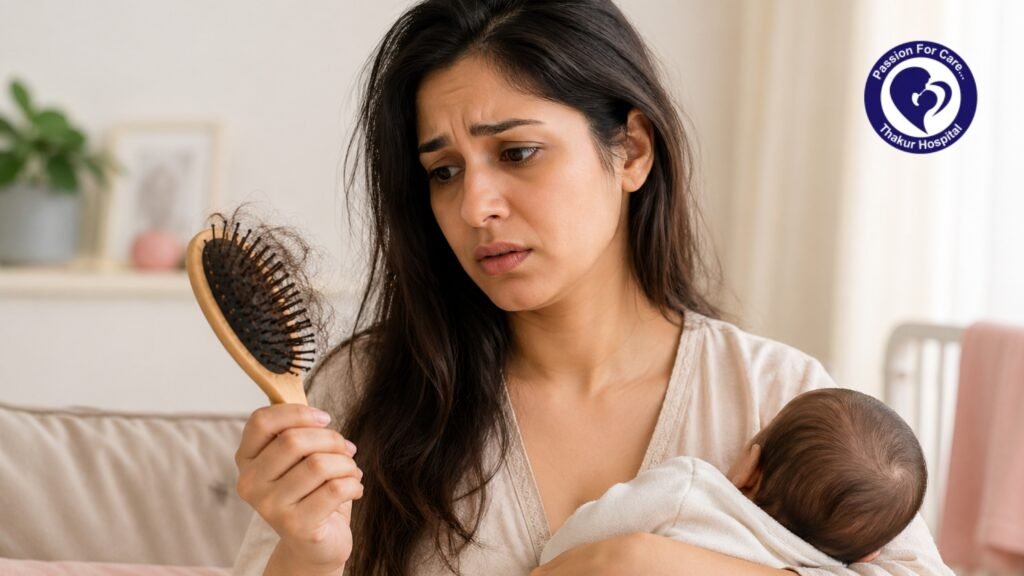
Noticing more hair on your pillow, in the shower drain, or on your comb after delivery? You’re not alone. Postpartum hair fall is one of the most common concerns among new moms in Karnal. While it can feel alarming, the good news is—it’s usually temporary and completely normal.
Let’s understand why it happens and what you can do about it.
What is postpartum hair fall?
Postpartum hair fall is the excessive shedding of hair that happens after childbirth, usually starting around 2 to 4 months after delivery. Medically, it is known as telogen effluvium.
During pregnancy, many women experience thicker, fuller hair due to hormonal changes. After delivery, those hormone levels drop suddenly, leading to increased hair shedding.
Why does hair fall increase after delivery?
The main reason is hormonal changes. During pregnancy, high levels of estrogen keep hair in the “growth phase” for longer, which reduces normal hair fall.
After delivery, estrogen levels drop rapidly, and all the hair that was in the growth phase shifts to the shedding phase at the same time. This results in noticeable hair fall.
Other contributing factors include:
- Physical stress from childbirth
- Lack of sleep
- Nutritional deficiencies
- Iron deficiency or anemia
- Hormonal imbalance
For many new moms in Karnal managing both recovery and baby care, these factors can add up.
When does postpartum hair fall start and stop?
Hair fall usually begins around 2–4 months after delivery and may continue for a few months.
Most women notice improvement by 6–12 months postpartum, as hormone levels stabilize and the hair growth cycle returns to normal.
Is it normal to lose a lot of hair?
Yes. It may seem like you’re losing too much hair, but in reality, your body is just shedding the extra hair that was retained during pregnancy.
You might notice:
- Hair coming out in clumps while washing
- Increased hair on your pillow
- Thinner ponytail
Although it looks excessive, it rarely leads to permanent hair loss.
Can breastfeeding cause hair fall?
No, breastfeeding itself does not cause hair fall. The shedding is mainly due to hormonal changes after delivery.
However, breastfeeding mothers need more nutrients, and if diet is not balanced, it may contribute to weakness and increased hair fall.
How can you reduce postpartum hair fall?
- Maintain a balanced diet rich in protein, iron, and vitamins
- Include foods like green vegetables, nuts, fruits, and whole grains
- Stay hydrated throughout the day
- Continue taking postnatal supplements if prescribed
- Use mild, chemical-free shampoos
- Avoid tight hairstyles that pull hair
- Limit heat styling and harsh treatments
Healthy habits support faster recovery and hair regrowth.
Does oiling help?
Yes, gentle oil massage can improve blood circulation to the scalp and strengthen hair roots.
Use natural oils like coconut or almond oil 1–2 times a week. Avoid excessive rubbing or pulling while massaging.
When should you worry about hair fall?
Consult a doctor if:
- Hair fall continues beyond 1 year postpartum
- You notice bald patches
- Severe thinning is visible
- Hair fall is accompanied by fatigue or weakness
- There are signs of thyroid issues or anemia
These may indicate an underlying condition that needs medical attention.
Common mistakes new moms should avoid
- Skipping meals due to a busy schedule
- Ignoring nutritional needs
- Using harsh chemical products
- Panic cutting hair very short without need
- Stressing excessively about hair fall
Remember, stress itself can worsen the problem.
Can hair grow back to normal?
Yes. In most cases, hair growth returns to normal within a year. New hair starts growing as your hormone levels stabilize. You may even notice baby hair regrowth around your hairline.
Patience is key—this phase is temporary.
How can new moms in Karnal take better care of themselves?
Taking care of your baby is important, but so is taking care of yourself. Adequate rest, good nutrition, and emotional support play a huge role in recovery after delivery.
If you’re unsure about your symptoms or need guidance, you can consult experts at Thakur Hospital where experienced doctors help new mothers manage post-delivery health concerns effectively.
Final thought
Hair fall after delivery can feel overwhelming, but it’s a natural part of postpartum recovery. Understanding the cause helps reduce anxiety and allows you to focus on the right care. Give your body time to heal, nourish yourself well, and trust the process—your hair will bounce back just like your strength.