

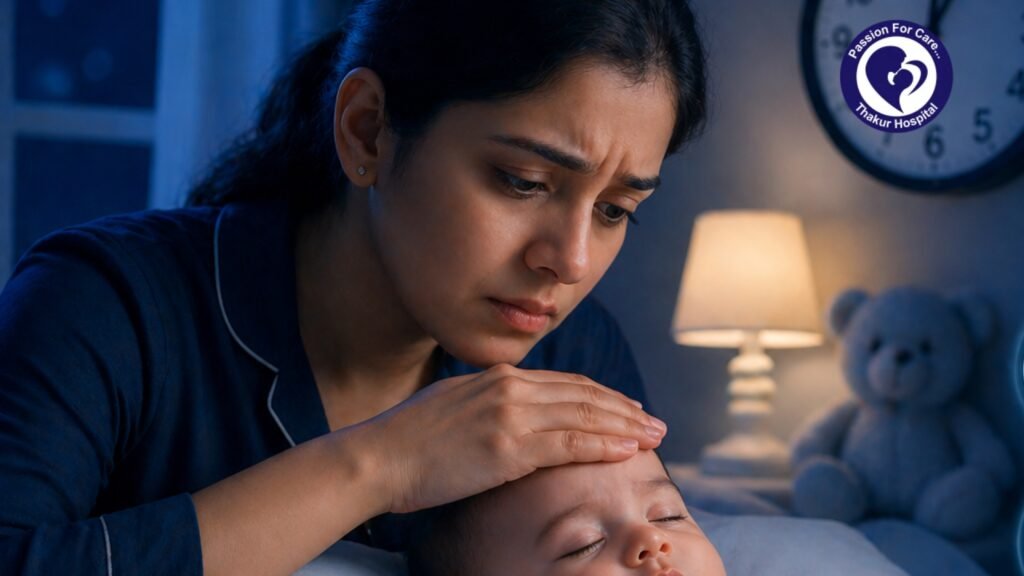
It’s 2 AM and your child suddenly feels hot, restless, or starts crying. Your heart starts racing—but this is a situation many parents face. The key is to stay calm, understand what’s happening, and take the right steps.
What is considered a fever?
If your child’s temperature is above 100.4°F (38°C), it is considered a fever. In children, fever is usually a sign that the body is fighting an infection such as a viral illness, cold, flu, or throat infection. In Karnal, seasonal changes—especially during monsoon and winter—often lead to sudden fever episodes in kids.
It’s important to understand that fever itself is not harmful in most cases. It is actually the body’s defense mechanism. However, how your child behaves during the fever matters more than the number on the thermometer.
What should you do first when your child wakes up with fever?
The first step is to confirm the fever. Use a digital thermometer for accurate results. Avoid guessing based on touch, as it can lead to unnecessary panic or delayed action.
Once confirmed, observe your child’s overall condition. Are they alert? Are they responding to you? Are they drinking fluids? These signs help you decide whether it’s manageable at home or needs medical attention.
Also, note the time and temperature. This helps track patterns if the fever continues.
Should you panic if it happens at night?
No, panic won’t help. Midnight fever is very common in children. Body temperature tends to rise in the evening and peak at night due to natural biological rhythms.
Most fevers are mild and settle within 2–3 days. If your child is playful, drinking fluids, and not showing alarming symptoms, you can manage it at home. However, staying alert and monitoring regularly is important.
How can you make your child comfortable immediately?
- Keep your child hydrated with breast milk, formula, or small sips of water every 15–20 minutes
- Offer ORS if your child is older and not eating well
- Dress your child in light, breathable cotton clothes to prevent overheating
- Avoid wrapping your child in blankets, which can trap heat and worsen fever
- Keep the room cool and well-ventilated, especially during humid nights in Karnal
- Let your child rest but don’t force sleep if they are uncomfortable
Comfort care is often the most effective way to help your child recover faster.
Can you give medicine at midnight?
Yes, but only when necessary. If your child has a fever above 101°F or seems uncomfortable, you can give paracetamol in the correct dose based on their weight.
Always follow your pediatrician’s guidance. Avoid giving ibuprofen without advice, especially in younger children. Never mix medicines or give antibiotics on your own.
Keep in mind that medicine helps reduce discomfort, not cure the infection instantly.
Should you do cold sponging?
Cold sponging is not recommended. It can cause shivering, which may actually increase body temperature.
Instead, use lukewarm water for gentle sponging if the fever is high. Focus on areas like the forehead, neck, underarms, and legs. This helps the body cool down naturally without causing stress to the child.
When should you worry?
Seek immediate medical help if you notice:
- Fever above 102°F that does not reduce even after medication
- Child is extremely sleepy, unresponsive, or difficult to wake
- Continuous vomiting or refusal to drink fluids for several hours
- Fast or labored breathing
- Seizures, stiffness, or unusual body movements
- Fever in infants below 3 months of age
- Rash along with fever
These signs may indicate a serious infection and should not be ignored.
Why does fever increase at night?
The body follows a natural cycle called the circadian rhythm. During the night, certain hormones trigger the immune system to work more actively, which can increase body temperature.
This is why many parents in Karnal notice their child’s fever rising after midnight, even if they seemed fine during the day.
Is it okay to let your child sleep with fever?
Yes, sleep is essential for recovery. If your child is sleeping peacefully, let them rest.
However, you should:
- Check their temperature every 3–4 hours
- Ensure they are not sweating excessively
- Wake them gently if it’s time for medication (if prescribed)
- Make sure they are breathing comfortably
Good rest helps the body fight infection more effectively.
What mistakes should parents avoid?
- Overdressing the child or using heavy blankets
- Giving adult medicines or incorrect dosages
- Ignoring hydration, which can worsen the condition
- Frequently waking the child unnecessarily
- Panicking and rushing to conclusions without observing symptoms
- Delaying doctor consultation when warning signs appear
Avoiding these common mistakes can make a big difference in how quickly your child recovers.
How can parents in Karnal be prepared for midnight emergencies?
- Keep a working digital thermometer at home
- Always have prescribed fever medicine available
- Store ORS packets for quick hydration support
- Save your pediatrician’s number for quick consultation
- Keep emergency contacts handy
- Know the nearest hospital that provides 24/7 pediatric care
Being prepared reduces stress and helps you act quickly during emergencies.
Where should you go in case of emergency in Karnal?
For immediate care and trusted pediatric support, parents can visit Thakur Hospital. With experienced doctors and child-focused care, it is a reliable option for handling late-night emergencies and fever-related concerns.
Final thought
Midnight fever can feel overwhelming, but most cases are manageable with the right approach. Focus on your child’s comfort, stay observant, and don’t hesitate to seek medical help when needed. A calm and informed parent is the best support a child can have during those late-night fever moments.