

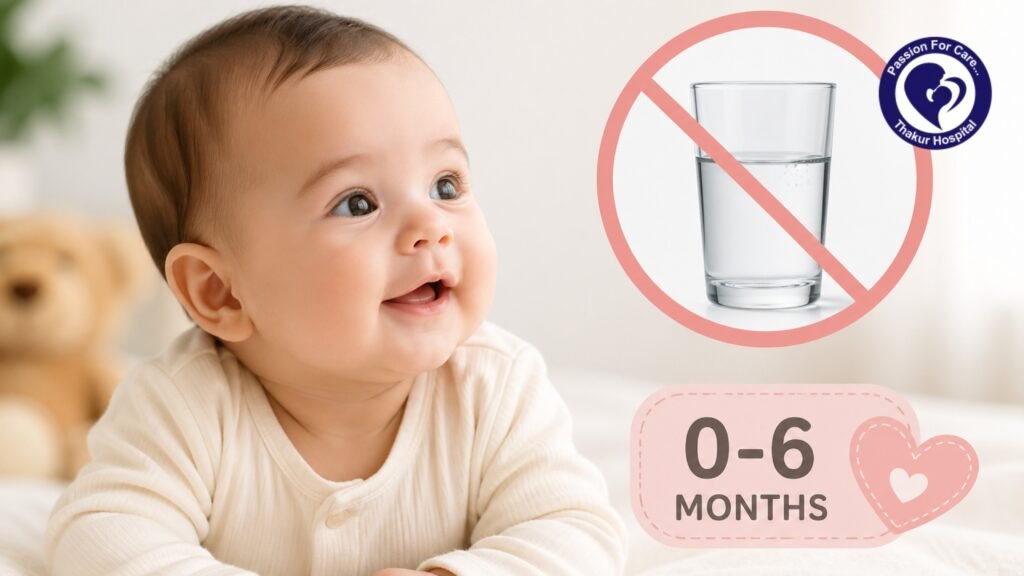
Many parents in Karnal often wonder, “Should I give water to my newborn, especially during hot weather?” It may feel natural to offer water when temperatures rise, but for babies under 6 months, the answer is clear—no, they do not need water.
In fact, giving water too early can do more harm than good. Let’s understand why.
Do babies really not need water?
Yes, babies below 6 months get all the hydration they need from breast milk or formula. Both breast milk and formula contain a high percentage of water—enough to keep your baby hydrated even during the hot summers of Karnal.
Breast milk is about 85–90% water, making it the perfect natural source of both nutrition and hydration.
Why is giving water before 6 months not recommended?
A baby’s body is still developing, especially the kidneys and digestive system. Giving water too early can disturb this delicate balance and lead to health issues.
Here’s why it should be avoided:
- It can fill the baby’s stomach, reducing hunger for breast milk or formula
- It may lead to poor nutrition and slow weight gain
- It increases the risk of infections if the water is not completely safe
- It can overload the baby’s kidneys
Even small amounts of water can impact a newborn more than you might expect.
What is water intoxication in babies?
Water intoxication is a serious condition that can occur when a baby consumes too much water. It dilutes the sodium levels in the body, which can affect brain function.
Signs of water intoxication include:
- Unusual sleepiness
- Irritability
- Swelling of the face
- Low body temperature
- In severe cases, seizures
Although rare, this is one of the main reasons doctors strongly advise against giving water to infants under 6 months.
But what about hot weather in Karnal?
This is one of the most common concerns. During peak summer, parents feel their baby might get thirsty. However, breast milk naturally adjusts to the baby’s needs.
The foremilk (the milk that comes at the beginning of a feed) is more watery and helps quench thirst. So even in extreme heat, frequent breastfeeding is enough to keep your baby hydrated.
For formula-fed babies, regular feeds provide sufficient fluids as well.
How often should you feed instead?
Instead of giving water, increase feeding frequency:
- Breastfeed every 2–3 hours or on demand
- Offer formula as per your baby’s usual schedule
- Watch for signs of hunger like sucking, crying, or restlessness
Frequent feeding is the safest way to maintain hydration.
When can babies start drinking water?
Babies can start having small amounts of water after 6 months of age, once solid foods are introduced. Even then, water should only be given in limited quantities alongside meals.
Before 1 year, water is not a replacement for milk—it’s just an addition.
Are there any exceptions?
In most cases, no water is needed before 6 months. However, in rare medical situations, a pediatrician may advise otherwise. Always follow professional guidance instead of home remedies or traditional beliefs.
Common mistakes parents should avoid
- Giving water during summer assuming the baby is thirsty
- Offering water after every feed
- Mixing extra water in formula
- Giving gripe water or other liquids without medical advice
- Listening to myths instead of medical guidance
Avoiding these mistakes helps ensure your baby gets proper nutrition and stays healthy.
How to know if your baby is well hydrated?
- Baby passes urine regularly (6–8 times a day)
- Mouth and lips are moist
- Baby is active and alert
- Normal weight gain
These are clear signs your baby is getting enough fluids from milk.
When should you consult a doctor?
- Baby shows signs of dehydration like dry mouth or reduced urination
- Baby is not feeding well
- Vomiting or diarrhea
- Poor weight gain
If you have any concerns about feeding or hydration, it’s always best to consult a pediatrician.
For expert newborn care and feeding guidance, parents in Karnal can visit Thakur Hospital where experienced doctors provide the right advice for your baby’s healthy growth.
Final thought
It may feel unusual, but babies truly don’t need water before 6 months. Breast milk or formula is more than enough to keep them hydrated—even in the hottest weather.
As a parent, the best thing you can do is trust science over myths and focus on regular feeding. Small, informed decisions like this can make a big difference in your baby’s health and development.